How to Manage Pest Infestations in Wooden Structures: Expert Guide
Timber construction represents one of humanity’s oldest and most enduring architectural traditions. Specifically, it blends structural versatility with natural aesthetic warmth. However, organic building materials exist within a dynamic ecological network. Consequently, wood-boring insects, subterranean fungi, and moisture-driven decay agents constantly seek to reclaim cellulose and lignin for biological recycling.
When property owners fail to implement rigorous protective barriers, biological invaders can compromise load-bearing timber members. This includes framing elements, floor joists, and architectural foundations. Mitigating these biological risks requires an exhaustive framework focused on how to manage pest infestations in wooden structures before structural integrity collapses.
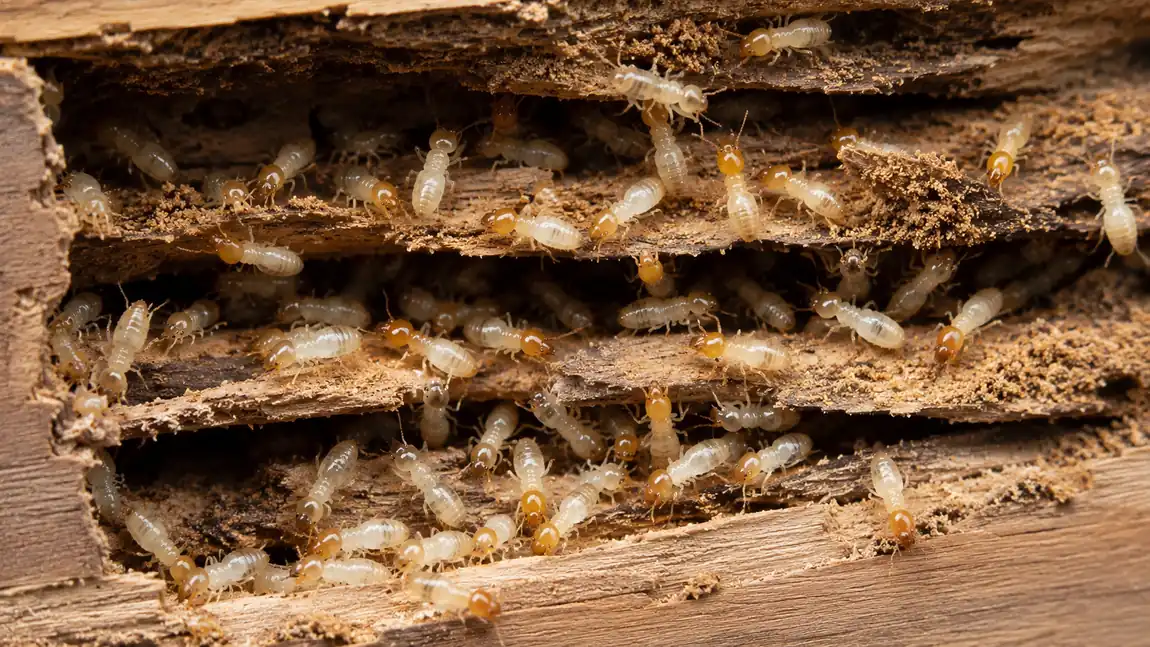
The ecological mechanics governing wood-destroying organisms involve complex interactions. Specifically, they depend on ambient moisture levels, wood porosity, temperature gradients, and colony dynamics. Termites, carpenter ants, powderpost beetles, and wood-decay fungi do not attack timber at random. Instead, they exploit specific environmental vulnerabilities. These include unventilated crawlspaces, chronic plumbing leaks, or direct wood-to-soil contact.
Many property owners assume that applying a surface pesticide spray halts an active infestation. Unfortunately, they ignore the reality that surface treatments fail to penetrate deep heartwood galleries. Within these cores, colonies feed, reproduce, and silently erode structural framing over multiple seasonal cycles.
Addressing these vulnerabilities demands a comprehensive synthesis of building science, entomology, wood chemistry, and structural engineering. Whether dealing with subterranean termite tubes threading through foundation walls or hidden moisture pockets breeding fungal decay, each biological threat dictates a distinct remediation methodology. Recognizing the systemic nature of timber pests ensures structural investments remain safe, compliant, and durable across decades. Ultimately, this prevents catastrophic biological failures.
Understanding “how to manage pest infestations in wooden structures”
The primary objective of evaluating how to manage pest infestations in wooden structures centers on isolation. Specifically, property owners must isolate the environmental, biological, and structural factors that enable wood-boring insects and fungi to colonize architectural timber. On unmanaged properties, occupants frequently commit critical errors. For instance, they rely on temporary cosmetic fixes, such as filling exit holes with wood putty or spraying minor deterrents. Meanwhile, they ignore the underlying moisture sources that attract wood-destroying organisms. A frequent miscalculation involves treating structural timber as an inert material rather than an organic matrix. Therefore, it requires continuous environmental control to prevent biological breakdown.
Understanding the full scope of how to manage pest infestations in wooden structures requires analyzing moisture content dynamics. Most wood-destroying fungi and insects require wood moisture content to exceed 20 percent to thrive and reproduce. When chronic roof leaks, condensation buildup, or inadequate subfloor ventilation elevate timber moisture, natural chemical defenses degrade. As a result, properties invite subterranean termites, dampwood termites, and powderpost beetles. Furthermore, utilizing untreated framing lumber in ground-contact zones guarantees rapid biological colonization unless rigorous physical or chemical barriers isolate the wood from soil moisture.
Another subtle dimension of how to manage pest infestations in wooden structures involves recognizing the difference between primary insects and secondary decay vectors. For instance, carpenter ants do not consume wood for nutrition. Instead, they excavate galleries within damp timber exclusively to build nesting sites. Consequently, eliminating carpenter ants with insecticides without repairing the moisture-damaged wood results in subsequent reinfestations. Comprehensive management demands that remediation strategies address both the biological organism and the sustaining environmental conditions. For additional insights on building durability, you can review our guide on crawlspace moisture encapsulation and general exterior wood preservation chemistry.
Deep Contextual Background: The Evolution of Timber Protection and Pest Mitigation
The historical trajectory of architectural timber protection reflects a continuous shift. Builders moved from rudimentary folk remedies toward modern integrated pest management and industrial wood preservation science. Historically, master builders relied heavily on selecting naturally durable heartwood species. Examples include old-growth oak, chestnut, redwood, or cedar. These contained natural chemical extractives toxic to insects and fungi. Additionally, traditional building designs incorporated deep roof overhangs, raised stone foundations, and cross-ventilation principles to keep framing timbers dry.
As industrial forestry expanded and old-growth timber supplies dwindled during the twentieth century, construction shifted toward faster-growing softwood species. These modern structural materials lacked natural decay resistance, leading to widespread structural failures from termite and fungal attacks. Consequently, the chemical preservation industry emerged. It developed pressure-treating technologies utilizing creosote, pentachlorophenol, and waterborne copper compounds to chemically impregnate lumber.
The contemporary regulatory and environmental landscape has evolved significantly. Today, it balances high-performance structural protection with ecological safety and human health considerations. Modern building codes mandate strict chemical retention standards, termite-resistant construction detailing, and non-toxic physical barriers. Understanding this historical transition helps modern property owners recognize a vital truth. Contemporary timber protection cannot rely on passive material durability alone; it demands an active, systematic approach to environmental moisture control.
Conceptual Frameworks and Mental Models
Navigating the biological and structural complexities of timber pest management requires robust mental models. These translate ecological principles into resilient building practices.
1. The Moisture-Cellulose-Organism Triangle
This mental model establishes that wood-destroying organisms require three simultaneous conditions to survive: a consumable cellulose source, a viable microclimate, and sufficient moisture content. Removing any single leg of this triangle—particularly controlling moisture—instantly halts biological activity.
2. The Core-Gallery Penetration Barrier
Unlike surface molds, wood-boring beetles operate entirely within the interior core of structural timbers. This mental model emphasizes that topical surface sprays are largely ineffective against established interior colonies. Instead, they necessitate systemic treatments, fumigation, or targeted injection methods.
3. The Structural Load Path Vulnerability Matrix
This model evaluates timber members as interconnected links in a structural load path. When pests hollow out a floor joist or stud, the localized loss of cross-sectional area compromises the entire building’s load-bearing capacity. Consequently, this requires structural shoring alongside pest eradication.
4. The Environmental Exclusion Boundary
This framework views a building envelope as a fortified ecosystem barrier. By maintaining physical gaps between soil and wood, utilizing termite shields, and sealing entry cracks, pests are physically excluded from accessing structural cellulose.
Key Categories or Variations of Wood-Destroying Organisms and Control Systems
Different wood-destroying organisms require distinct identification and control methodologies to maintain architectural integrity. This directly influences how property owners execute protocols on how to manage pest infestations in wooden structures.
| Pest / Organism Category | Primary Biological Signature | Main Control Pitfall | Optimal Remediation Context |
| Subterranean Termites | Mud tubes, hollowed wood sounding dull, discarded wings | Treating only visible worker termites without locating the queen and central colony | Soil trenching with termiticides, bait stations, and removing wood-soil contacts |
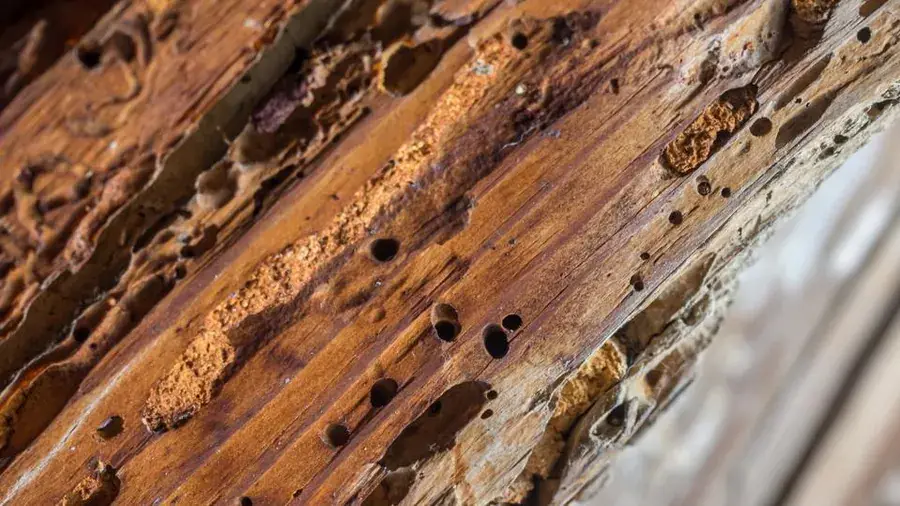
| Powderpost Beetles | Fine, talcum-powder-like frass piling beneath tiny circular exit holes | Painting over exit holes without treating internal larval galleries | Borate surface treatments, heat treatment, or targeted fumigation |
| Carpenter Ants | Coarse, sawdust-like debris containing insect body parts | Spraying worker ants while leaving the primary nest in damp structural cavities | Locating nests and applying non-repellent residual insecticides |
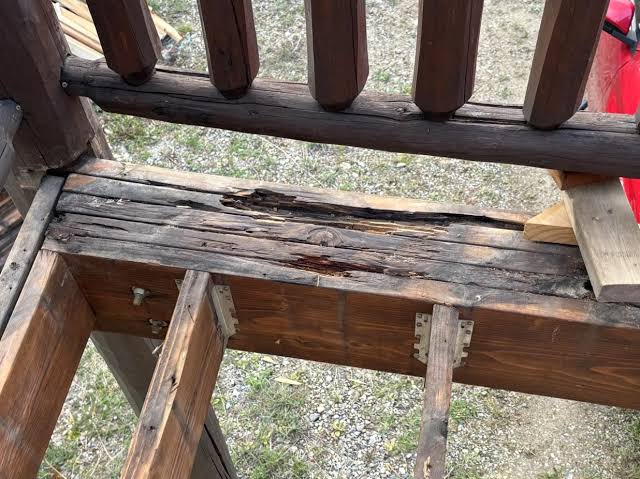
| Wood-Decay Fungi (Rot) | Cracking, cubical checking, spongy texture, damp musty odor | Replacing rotted wood without stopping the active moisture source causing the rot | Improving ventilation, eliminating leaks, and replacing structural framing |
| Drywood Termites | Hard, hexagonal fecal pellets piled near kick-out holes | Applying liquid soil termiticides ineffective against non-soil-dwelling species | Localized spot treatments, microwave treatment, or structural tent fumigation |
| Dampwood Termites | Large galleries with smooth, sandpapered interiors in high-moisture wood | Ignoring severe chronic plumbing or roof leaks that elevate wood moisture | Correcting high-moisture conditions and replacing damaged structural timbers |
Strategic Decision Logic for Pest Eradication Selection
-
Identify the Specific Organism First: Never apply generic pesticides before confirming whether damage stems from beetles, termites, or fungal rot.
-
Eliminate Moisture Sources Prior to Treatment: For fungal decay and carpenter ants, chemical applications fail entirely if underlying moisture sources remain uncorrected.
-
Engage Professional Engineers for Core Damage: If wood-boring insects have hollowed out major load-bearing columns, temporary shoring must precede cosmetic repairs.
Detailed Real-World Scenarios and Operational Constraints
Examining actual field conditions illustrates how theoretical management frameworks adapt to physical and biological realities.
A : Historic Timber-Framed House with Subterranean Termites
A property owner discovers subterranean termite mud tubes climbing up brick foundation piers in an unventilated 19th-century crawlspace.
-
Constraints: Historic preservation guidelines prevent altering original framing, while tight crawlspace headroom restricts heavy equipment access.
-
Failure Modes: Spraying retail aerosol insecticides into crawlspace air kills a few surface workers but leaves the main colony undisturbed.
-
Second-Order Effects: Unchecked colony growth hollows out primary sill plates, causing doors to jam and floor framing to sag unevenly.
-
Optimized Solution: The plan installs a continuous professional termiticide soil barrier around foundation piers, lays a heavy vapor barrier across the dirt floor, and improves cross-ventilation louvers.
B : Modern Suburb Home with Powderpost Beetles
The occupants notice fine powder accumulating beneath oak hardwood flooring planks and exposed roof rafters in an attic storage zone.
-
Constraints: Finished hardwood floors cannot be easily replaced without destroying interior aesthetics, and attic spaces experience extreme temperature fluctuations.
-
Failure Modes: Assuming beetles are dead because no live insects are visible during winter allows larvae to continue eating interior wood fibers.
-
Second-Order Effects: Structural weakening of attic roof trusses and extensive cosmetic destruction of finished hardwood flooring surfaces.
-
Optimized Solution: Application of a penetrating borate solution to exposed framing timbers, which absorbs into the wood and eliminates beetle larvae feeding on cellulose.
C : Coastal Property with Formosan Termites and High Humidity
A beachfront home experiences aggressive Formosan subterranean termite activity within wall cavities alongside chronic high ambient humidity.
-
Constraints: Aggressive multi-colony populations capable of establishing aerial nests without ground contact, combined with a corrosive salt-air environment.
-
Failure Modes: Relying solely on standard localized bait stations when aerial nests exist inside sealed wall cavities independent of soil contact.
-
Second-Order Effects: Rapid structural destruction of wall studs and header beams, threatening roof collapse during coastal storm events.
-
Optimized Solution: Combination of targeted drywood foam treatments inside wall voids with perimeter subterranean bait monitoring networks and commercial dehumidification systems.
Planning, Cost, and Resource Dynamics
Financial efficiency in timber pest management depends on balancing upfront remediation expenditures against catastrophic structural reconstruction costs. This ties directly into how managers approach how to manage pest infestations in wooden structures.
Direct vs. Indirect Cost Structures
Direct expenses include professional pest inspection fees, chemical termiticide applications, structural fumigation services, and timber replacement labor. Indirect expenses—frequently underestimated during initial budgeting—include temporary relocation costs during fumigation, drywall demolition, flooring replacement, and structural engineering assessments.
Opportunity Cost and Deferred Remediation Multipliers
Attempting to save money upfront by ignoring early signs of pest damage creates massive financial exposure. A minor beetle issue left unaddressed for years can transform into a total structural overhaul. External industry guidelines from structural engineering authorities such as the Forest Products Laboratory emphasize that timely maintenance preserves capital stability and protects property equity.
| Expense Category | Typical Cost Range (% of Total Budget) | Primary Cost Drivers |
| Inspection & Diagnostic Assessment | 5% – 15% | Specialized thermal imaging, moisture meters, engineering review, lab ID |
| Extermination & Chemical Treatment | 25% – 40% | Treatment method (fumigation vs. liquid barrier vs. bait systems), square footage |
| Moisture Mitigation & Ventilation | 20% – 35% | Crawlspace encapsulation, sump pumps, dehumidifiers, plumbing repairs |
| Structural Timber Repair & Replacement | 30% – 50% | Extent of hollowing, load-bearing shoring, finish material reconstruction |
Tools, Strategies, and Support Systems
Executing a comprehensive pest management plan requires deploying specialized tools and diagnostic equipment rather than relying on visual guesswork.
1. Pin-Type and Pinless Moisture Meters
Accurately measuring internal wood moisture content is essential. Meters identify elevated moisture zones signaling active fungal decay or conditions favorable to insect infestation.
2. Acoustic Emission Detectors and Thermal Imaging
Advanced diagnostic tools detect the subtle chewing sounds of hidden larvae inside wood or visualize temperature anomalies associated with active termite nests behind walls.
3. Professional Borate-Based Wood Preservatives
Water-soluble borate solutions penetrate unsealed lumber, rendering the wood permanently toxic to insects and fungi while remaining safe for human handling when dry.
4. Rotary Hammer Drills and Injection Systems
Treating subterranean termites or drywood galleries often requires drilling precise holes through concrete slabs or wood members to inject liquid termiticides directly into nests.
5. Heavy-Duty Subfloor Dehumidifiers and Vapor Barriers
Installing commercial-grade encapsulation systems controls relative humidity in crawlspaces, eliminating the moisture required by fungi and damp-loving insects.
6. Specialized Boroscope Inspection Cameras
Flexible fiber-optic cameras enable technicians to inspect the interior of wall cavities, subfloor spaces, and timber joints without requiring destructive wall demolition.
Risk Landscape and Failure Modes
Understanding how timber pest management protocols fail prevents misdirected spending and catastrophic structural compromises.
1. Incomplete Colony Eradication
Treating only worker insects visible on the surface while failing to locate the central queen or subterranean nest allows the colony to rapidly regenerate.
2. Failure to Rectify Underlying Moisture Sources
Applying chemical treatments to wood damaged by fungal decay without repairing roof leaks or plumbing failures results in immediate re-infection.
3. Chemical Resistance and Sub-Lethal Dosages
Applying diluted or insufficient quantities of termiticides trains insect populations to avoid treated zones rather than eliminating them.
4. Unaddressed Structural Compromise
Eradicating living pests without repairing or shoring up hollowed framing members leaves the building structurally vulnerable to wind and seismic loads.
Governance, Maintenance, and Long-Term Adaptation
Sustaining a pest-free wooden structure requires institutional governance, clear operational accountability, and structured inspection cadences.
Monitoring Schedules and Audit Cadence
-
Quarterly Visual Perimeter Audits: Inspect foundation walls, crawlspace vents, and exterior wood siding every three months for new mud tubes or frass piles.
-
Semi-Annual Moisture and Ventilation Checks: Measure timber moisture content in high-risk zones to ensure relative humidity remains below safe thresholds.
-
Annual Professional Pest Inspections: Engage licensed structural pest control operators annually to conduct comprehensive diagnostic evaluations.
Adjustment Triggers and Layered Checklists
Property owners must establish explicit thresholds for maintenance intervention. If wood surfaces sound hollow when tapped, or if framing timbers show fungal cracking, protocol requires professional evaluation. Standardized maintenance checklists should verify:
-
Continuous clearance between exterior soil grades and wood siding or framing.
-
Unobstructed cross-ventilation flow across crawlspaces and attic spaces.
-
Absolute absence of plumbing leaks, roof flashing failures, or gutter overflows.
-
Intact soil termiticide barriers or functioning electronic monitoring bait stations.
Measurement, Tracking, and Evaluation
A mature property management program evaluates timber health and pest resilience through rigorous metric tracking and historical documentation.
Leading vs. Lagging Indicators
-
Lagging Indicators: Visible structural sagging, collapsing drywall, and extensive frass accumulation. These measure historical biological damage rather than current system defense.
-
Leading Indicators: Periodic wood moisture meter logs, crawlspace relative humidity trends, and annual pest inspection clearance certificates. These metrics predict potential vulnerabilities before infestations occur.
Documentation Structures
Effective long-term asset management relies on maintaining a permanent, searchable site history file containing:
-
Pest Inspection Reports: Chronological records detailing past infestations, treated zones, and chemical application specifications.
-
Moisture Tracking Logs: Seasonal moisture content readings across vulnerable structural framing members.
-
Remediation Invoices and Warranties: Documentation covering professional termiticide warranties and structural repair certifications.
Common Misconceptions and Oversimplifications
-
“If you cannot see bugs crawling on the wood, the structure is completely safe.”
-
Correction: Wood-boring beetles and subterranean termites operate entirely within the interior core of timber members, displaying zero external activity until failure occurs.
-
-
“Painting or sealing wood exterior surfaces guarantees complete protection.”
-
Correction: Paint only deters surface moisture temporarily; pests attack unsealed wood from behind or enter through ground-contact points.
-
-
“Carpenter ants eat wood just like termites for their primary nutrition.”
-
Correction: Carpenter ants do not consume wood; they excavate it solely to create nesting galleries, meaning moisture-damaged wood must be present.
-
-
“Applying liquid bug spray around the base of a house stops subterranean termites permanently.”
-
Correction: Surface sprays kill individual foraging workers but fail to reach underground colonies, which simply reroute their tunnels.
-
-
“Drywood termites and subterranean termites can be treated using identical chemical methods.”
-
Correction: Subterranean termites require soil treatments, whereas drywood termites live entirely inside dry wood above ground, requiring fumigation.
-
-
“Fungal wood rot will dry out and disappear on its own once summer arrives.”
-
Correction: Once fungal decay hyphae colonize wood, they continue digesting cellulose as long as minimum moisture remains.
-
-
“Standard home insurance policies cover the cost of repairing insect damage.”
-
Correction: Standard homeowner insurance policies universally classify insect and fungal damage as preventable maintenance issues, excluding them from coverage.
-
Ethical, Practical, or Contextual Considerations
Managing wood-destroying organisms carries significant environmental and structural responsibilities. Broad-spectrum chemical termiticides and fumigants involve powerful synthetic compounds that, if misapplied, can leach into local groundwater or impact beneficial insect populations. Responsible property maintenance requires prioritizing integrated pest management principles—emphasizing environmental moisture control, physical exclusion barriers, and targeted borate treatments—before resorting to heavy chemical interventions.
Furthermore, economic efficiency should never compromise structural safety or public health. Cutting corners on professional termite remediation or ignoring severe fungal rot in load-bearing framing creates catastrophic collapse hazards. True engineering integrity requires accepting necessary foundational expenditures to ensure structures remain durable across decades of environmental exposure.
Conclusion
Preserving wooden architectural structures requires rigorous biological understanding, proactive environmental monitoring, and unwavering adherence to pest management standards. By avoiding common pitfalls—such as ignoring hidden moisture sources, relying on ineffective surface sprays, or failing to identify specific wood-destroying organisms—property owners can ensure their timber assets remain structurally sound against biological degradation. Mastered carefully, understanding how to manage pest infestations in wooden structures provides an enduring framework for safe and long-lasting architectural preservation.