How to Plan Outdoor Lighting Setups on a Budget: Expert Guide
Illuminating exterior spaces effectively involves a delicate equilibrium. Specifically, it requires a balance between architectural enhancement, functional safety, and fiscal discipline. When property owners approach exterior illumination without a structured strategy, expenses routinely spiral out of control. Consequently, costs surge through redundant fixture purchases, inefficient low-voltage wiring runs, and premature hardware degradation.
Mastering how to plan outdoor lighting setups on a budget requires a deliberate shift. Owners must move away from impulse-driven retail buying toward systematic electrical design, photometric calculation, and strategic resource allocation. Nighttime environments possess distinct visual characteristics compared to daytime landscapes. For instance, shadows lengthen, textures sharpen, and poorly positioned light sources create harsh glares rather than inviting ambiance.
The financial consequences of inadequate planning extend well beyond the initial purchase price of luminaires and transformers. Low-cost fixtures constructed from substandard metals or inferior seals frequently succumb to moisture corrosion within a single seasonal cycle. Therefore, they demand complete replacement and repeating labor expenditures.
Furthermore, miscalculated transformer capacities or mismatched cable gauges lead to voltage drop. As a result, distant lamps dim prematurely, forcing the entire system to draw excessive current. True cost efficiency emerges from recognizing a fundamental truth. Durable exterior illumination is an engineered infrastructure project rather than a collection of decorative lawn ornaments.
Developing a resilient, cost-effective exterior lighting scheme demands a rigorous synthesis of electrical engineering principles, environmental awareness, and spatial analysis. Every property presents unique topographical contours, vegetation density levels, and focal architectural elements. These factors dictate how light propagates and reflects.
By establishing a methodical phased implementation plan, property owners can prioritize critical safety zones. These zones include steps, pathways, and entry points. Meanwhile, they can defer purely aesthetic accent lighting until subsequent budget allocations permit. The following analysis explores these dimensions in exhaustive detail. Ultimately, it establishes an authoritative framework for economical and sophisticated exterior illumination.
Understanding how to plan outdoor lighting setups on a budget
The core objective of how to plan outdoor lighting setups on a budget centers on maximizing visual impact and structural safety per dollar invested. This is achieved by eliminating architectural redundancy and optimizing electrical efficiency. On unmanaged properties, homeowners frequently commit capital to high-lumens floodlights. Unfortunately, these wash out architectural detail, produce dangerous glare for neighbors, and inflate monthly utility bills.
Conversely, an economically optimized system directs precise lumens to intentional focal points. Examples include textured stone walls, mature specimen trees, or critical pathway steps, using low-wattage, high-efficacy solid-state components.
A frequent error in budget-conscious lighting design involves treating all luminaires as interchangeable commodity items. Selecting the cheapest box-store fixtures without evaluating beam spreads, color temperature consistency, or ingress protection ratings guarantees rapid equipment failure. Truly understanding how to plan outdoor lighting setups on a budget requires recognizing that upfront capital savings evaporate instantly if hardware fails after a single winter freeze-thaw cycle. Durability, modular repairability, and manufacturer warranty coverage are critical financial variables within any low-cost design paradigm. For broader electrical safety standards and regulatory compliance references, you can consult guidelines provided by the Occupational Safety and Health Administration.
Furthermore, oversimplifying the underlying electrical topology leads to hidden costs and severe performance bottlenecks. Low-voltage 12-volt systems are overwhelmingly favored for residential budgets due to safety and ease of installation. However, failing to account for cable voltage drop across long runs results in uneven lamp brightness.
To compensate, installers often purchase oversized, expensive transformers or heavy-gauge copper wiring unnecessarily. Comprehensive planning balances transformer loading, cable length calculations, and luminaire wattage draws from inception. Consequently, every dollar spent directly contributes to stable, long-term system performance. To explore related best practices, read our detailed guide on residential electrical safety protocols.
Deep Contextual Background
The historical trajectory of exterior illumination reflects a continuous technological migration. Builders moved from combustion-based hazard mitigation toward electrical aesthetic expression. For centuries, outdoor lighting served strictly utilitarian purposes. It guided travelers past physical hazards, deterred intruders, and marked urban boundaries using oil lamps, gas lanterns, and early incandescent filaments.
However, these systems were notoriously labor-intensive, thermally inefficient, and financially prohibitive for routine residential use. They confined extensive night-time property visibility strictly to affluent estates.
The late-twentieth-century democratization of low-voltage halogen technology expanded landscape lighting access for middle-income property owners. Halogen systems offered warmer color rendering and compact fixture profiles compared to bulky line-voltage floodlights.
Nevertheless, they suffered from high thermal output, heavy energy consumption, and short operational lifespans. Specifically, bulbs typically lasted between 2,000 and 4,000 hours. Consequently, maintaining a halogen setup involved recurring annual bulb replacement cycles and substantial electricity costs.
The contemporary transition to high-efficiency light-emitting diode technology has fundamentally transformed the economics of exterior illumination. Modern LEDs reduce energy consumption by up to 85 percent compared to legacy sources. Furthermore, they offer operational lifespans exceeding 30,000 to 50,000 hours. This technological leap enables property owners to design expansive, multi-zone lighting layouts that operate on fractional electrical loads. As a result, professional-grade nightscapes become achievable within strict financial parameters.
Conceptual Frameworks and Mental Models
Navigating the financial and technical complexities of exterior illumination requires robust mental models. These translate physical lighting principles into cost-effective design choices.
1. The Layered Illumination Matrix
This mental model categorizes outdoor light into three distinct functional tiers: ambient, task, and accent. Budget overruns typically occur when installers attempt to illuminate an entire yard with bright ambient lighting.
A cost-effective strategy relies primarily on low-wattage accent and task lighting. This allows darkness to provide natural contrast, significantly reducing the total number of fixtures required.
2. The Lumen-to-Watt Efficiency Frontier
Historically, consumers measured light output by wattage, assuming higher wattage equated to better illumination. In the era of solid-state electronics, lighting output is measured strictly in lumens. Evaluating systems through the lens of lumen-per-watt efficacy ensures that every chosen fixture delivers maximum visible output for minimal electrical draw. Consequently, this shrinks transformer and wiring infrastructure costs.
3. Voltage Drop and Circuit Resistance Economy
Electricity traveling through low-voltage cable encounters resistance, converting electrical energy into heat and causing voltage to drop. Mental models in this domain treat copper cable as a financial asset. Undersizing wire forces the purchase of expensive multi-tap transformers, whereas proper circuit layout and loop wiring configurations maximize efficiency using affordable, standard-gauge cables.
4. The Optical Control vs. Raw Power Trade-Off
Instead of relying on high-lumen raw power to wash an entire landscape, this model emphasizes optical control. Installers utilize precise reflectors, louvers, and narrow beam spreads to direct light precisely where needed. Precision optics prevent light spill, protect dark skies, and allow lower-wattage fixtures to achieve dramatic visual results.
Key Categories or Variations of Outdoor Lighting Systems
Different landscape zones and architectural features require distinct luminaire categories to maintain visual harmony and structural durability on a budget. This forms a core component of how to plan outdoor lighting setups on a budget.
| Lighting Category | Primary Optical Function | Main Budget Pitfall | Optimal Application Context |
| Path and Spread Lights | Directs illumination downward onto walkways to prevent tripping hazards | Purchasing fragile plastic stakes that snap under foot traffic or lawnmowers | Walkways, garden borders, and driveway perimeters |
| Well and Uplights | Recessed in-ground or surface-mounted fixtures pointing upward | Water pooling in un-drained housings causing electrical shorts | Highlighting mature trees, architectural columns, and stone walls |
| Spot and Accent Fixtures | Narrow-beam adjustable luminaires targeting specific focal points | Over-specifying high-luminous output, creating blinding glare | Flagpoles, sculptural garden elements, and signboards |
| Hardscape and Step Lights | Low-profile fixtures integrated directly into retaining walls and stairs | Inaccessible wiring splices requiring masonry demolition upon failure | Masonry retaining walls, stair risers, and outdoor kitchens |
| Flood and Security Lights | Wide-angle, high-lumen illumination covering expansive zones | Relying on unshielded security floods that wash out neighborhood aesthetics | Rear utility yards, dark side-passages, and large vehicular parking pads |
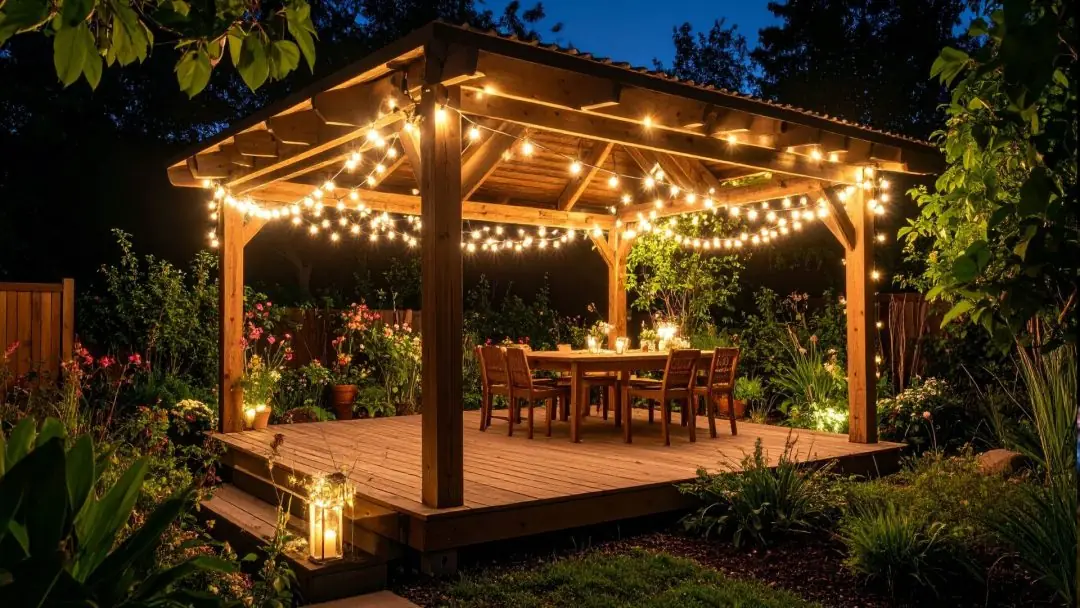
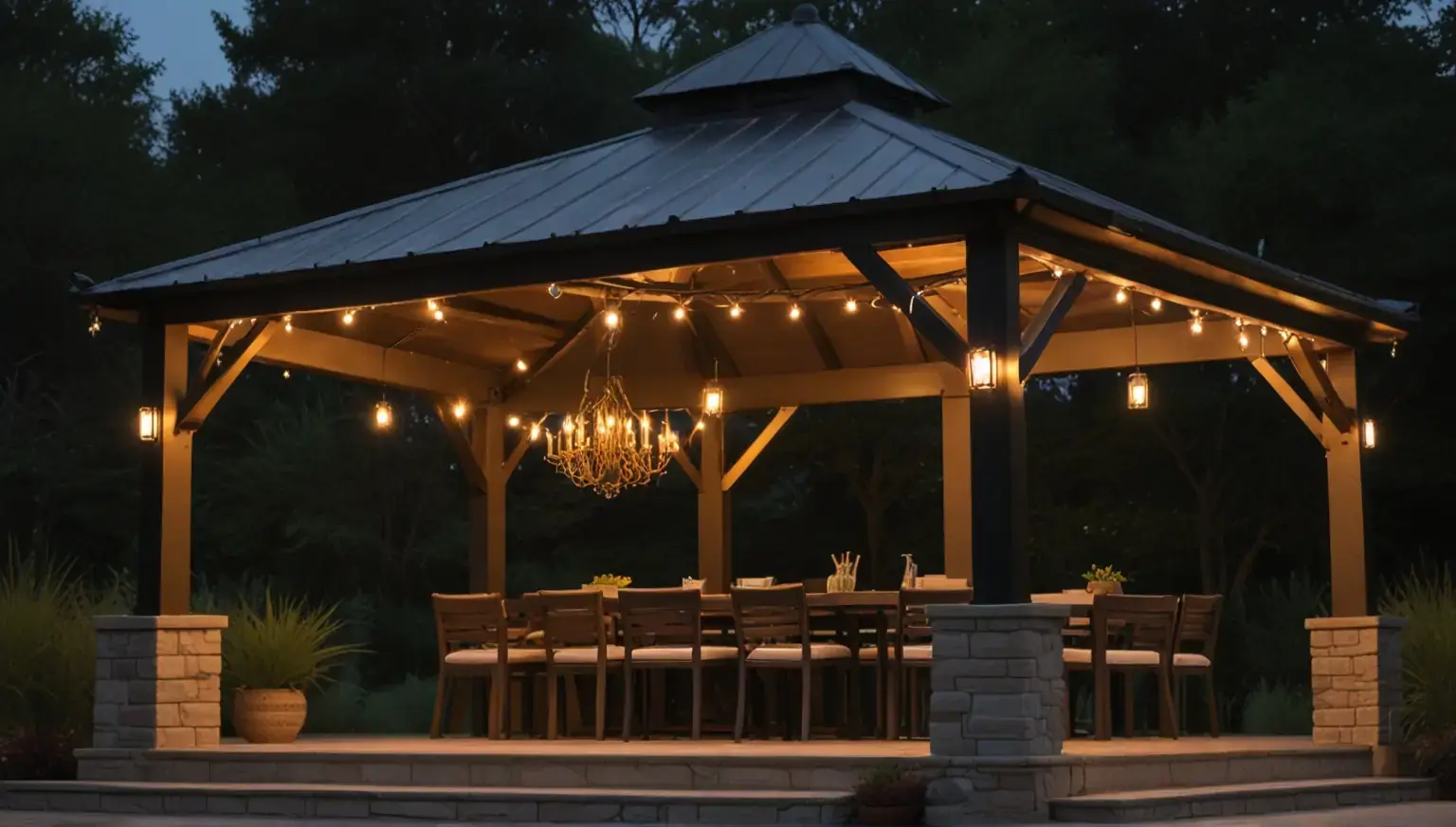
| String and Festoon Lights | Overhead ambient suspension providing festive, low-intensity glow | Utilizing non-weatherproof lamp sockets and unrated hanging wire | Patios, pergolas, and outdoor dining decks |
Strategic Decision Logic for System Component Selection
-
Prioritize Safety Zones First: Allocate the majority of an initial budget to code-required path and step lighting. Aesthetic tree uplighting should be treated as a secondary phase that can be added incrementally over subsequent seasons.
-
Standardize Fixture Connectors: Avoid proprietary quick-connect clips that degrade in wet soil. Selecting robust, gel-filled wire nuts or mechanical screw connectors prevents intermittent ground faults.
-
Select Integrated vs. Replaceable Lamps: For tight budgets, modular fixtures utilizing replaceable LED lamps offer lower long-term maintenance flexibility. Conversely, sealed integrated LED fixtures provide superior moisture sealing at a higher initial replacement cost.
Detailed Real-World Scenarios and Operational Constraints
Examining actual field conditions illustrates how theoretical design frameworks adapt to physical and budgetary realities.
A : Sloped Suburban Backyard with Extensive Turf and Mature Trees
A homeowner seeks to illuminate a sloping rear yard featuring uneven turf and several large oak trees. They must do so without disrupting active children’s play areas or exceeding a strict baseline budget.
-
Constraints: Sloped terrain complicates cable trenching, alongside high exposure to seasonal lawn-maintenance equipment that can strike exposed fixtures.
-
Failure Modes: Low-profile path lights get sheared off by lawnmowers. Furthermore, voltage drop occurs over long cable runs extending down the slope.
-
Second-Order Effects: Broken fixtures expose live 12-volt wiring to standing irrigation water, tripping GFCI breakers and disabling entire lighting zones.
-
Optimized Solution: The plan utilizes heavy-duty cast-brass uplights anchored firmly at the base of mature trees rather than delicate ground stakes. Additionally, it combines this with an overhead tree-mounted downlighting strategy that covers a broad zone with a single fixture.
B : Urban Townhouse Concrete Patio with Zero Soil Access
An urban property owner wants to create an inviting evening entertainment environment on a small, fully paved concrete courtyard with no exposed earth.
-
Constraints: Zero soil penetration is allowed, accompanied by strict HOA regulations prohibiting blinding light spill into neighboring properties.
-
Failure Modes: Surface-run cables create tripping hazards. Moreover, adhesive-backed LED strips peel off damp masonry walls due to temperature swings.
-
Second-Order Effects: Electrical wire chafing against sharp concrete expansion joints leads to short circuits and permanent transformer damage.
-
Optimized Solution: The design deploys weighted base planters integrated with low-voltage spot fixtures. Furthermore, it incorporates overhead festoon string lighting suspended via existing structural anchor points.
C : Rural Acreage Perimeter and Long Driveway
A rural property requires functional guidance along a long, unlit gravel driveway and security perimeter fencing where electrical grid access is distant.
-
Constraints: Extreme distance from the household electrical panel, plus the complete absence of hardwired power sources near the driveway entrance.
-
Failure Modes: Standard low-voltage wire suffers catastrophic voltage drop over distances exceeding 200 feet. Simultaneously, cheap solar lights fail to charge during overcast winter months.
-
Optimized Solution: Implementation of a hybrid strategy. High-efficiency commercial solar-powered motion floodlights are placed at the remote entry gate, while a dedicated, heavy-gauge low-voltage transformer is consolidated near the primary garage for immediate architectural approaches.
Planning, Cost, and Resource Dynamics
Financial efficiency in exterior lighting construction depends on balancing upfront equipment expenditures against long-term operational costs. This consideration is vital when evaluating how to plan outdoor lighting setups on a budget.
Direct vs. Indirect Cost Structures
Direct expenses include low-voltage transformers, spool cable, luminaire bodies, LED lamps, waterproof wire connectors, and mounting hardware. Indirect expenses—frequently underestimated during initial DIY budgeting—include masonry drill bits, trenching shovels, silicone sealants, replacement stakes, and diagnostic multimeters.
Opportunity Cost and Deferred Expansion Multipliers
Attempting to minimize upfront costs by purchasing an undersized transformer eliminates future flexibility. Adding even a single accent light later requires purchasing an entirely new, larger transformer. Purchasing a mid-tier multi-tap transformer with spare capacity preserves financial flexibility, allowing phased system expansion over multiple fiscal quarters.
| Expense Category | Typical Cost Range (% of Total Budget) | Primary Cost Drivers |
| Transformers & Power Supplies | 15% – 25% | Wattage capacity, stainless steel housing, smart timer/photocell integration |
| Luminaires & Fixture Bodies | 40% – 60% | Material selection (cast brass vs. cast aluminum vs. plastic), optical precision |
| Cable & Wiring Infrastructure | 10% – 20% | Wire gauge (10/2 vs. 12/2 vs. 14/2), oxygen-free copper purity, direct-burial rating |
| Hardware, Connectors, & Accessories | 5% – 15% | Gel-filled wire nuts, mounting stakes, waterproof junction boxes, trenching tools |
Tools, Strategies, and Support Systems
Executing a cost-effective exterior lighting layout requires deploying specialized tools and systematic strategies rather than relying on guesswork.
1. Digital Multimeter
A reliable digital multimeter is essential for measuring operational voltage at the furthest fixture runs. Verifying that voltage at the lamp socket remains between 10.8 and 12.0 volts prevents premature lamp burnouts and ensures consistent illumination.
2. Direct-Burial Low-Voltage Cable
Selecting genuine stranded copper, direct-burial cable ensures long-term conductivity. Conversely, cheap aluminum-clad wire corrodes rapidly underground, introducing high electrical resistance and system failure within seasons.
3. Professional Wire Strippers and Crimpers
Clean, precise wire preparation prevents loose connections that create high-resistance electrical bottlenecks. Proper stripping ensures that gel-filled waterproof wire nuts create a secure, corrosion-proof bond.
4. Photocell and Astronomical Timers
Integrating an astronomical timer or a heavy-duty photocell automates operational schedules based on local sunset and sunrise times. Consequently, this eliminates wasted electricity from systems left running during daylight hours.
5. Heavy-Duty Trenching Edger or Mattock
Manual trenching through compacted lawn and clay can stall projects. Utilizing a half-moon lawn edger or a structural mattock allows clean, 3-to-4-inch deep cuts beneath turf roots without heavy motorized trenchers.
6. Photometric Lighting Simulation Apps
Free mobile tools and manufacturer lighting calculators help estimate beam angles, spread diameters, and foot-candle distributions. This prevents purchasing incorrect fixture quantities and saves unnecessary retail returns.
Risk Landscape and Failure Modes
Understanding how exterior lighting systems fail prevents misdirected spending and hazardous electrical conditions.
1. Moisture Ingress and Corrosion
Outdoor environments subject electronics to extreme humidity, standing water, and irrigation spray. Fixtures lacking proper IP ratings allow moisture to reach lamp sockets, creating short circuits that trip transformers.
2. Overloaded Transformer Thermal Trip
Exceeding the maximum wattage capacity of a transformer causes internal thermal breakers to trip repeatedly. Operating transformers at maximum load without a safety margin shortens equipment lifespan and causes frequent outages.
3. Voltage Drop and Asymmetric Dimming
Running excessive fixture loads over long, thin-gauge wire starves distant lamps of necessary voltage. This results in an unbalanced aesthetic where front fixtures glow brilliantly while rear fixtures emit a faint, amber glimmer.
4. Line-Voltage Exposure Hazards
While low-voltage systems are inherently safe for amateur installation, poor wire splicing or exposed main lines near property irrigation boxes can pose hazards if improperly insulated, leading to ground faults.
Governance, Maintenance, and Long-Term Adaptation
Sustaining an economical exterior lighting system requires institutional governance, clear operational accountability, and structured inspection cadences.
Monitoring Schedules and Audit Cadence
-
Quarterly Lens and Fixture Checks: Clear accumulated soil, mulch, and fallen leaves from fixture lenses and uplight housings to maintain optimal lumen output.
-
Semi-Annual Electrical Testing: Utilize a digital multimeter at terminal fixture points to verify that ground connections remain solid and voltage levels remain stable.
-
Seasonal Adjustment Audits: Reposition adjustable accent spotlights as deciduous trees drop their leaves or summer foliage expands, ensuring light beams remain targeted accurately.
Adjustment Triggers and Layered Checklists
Property owners must establish explicit thresholds for maintenance intervention. If a fixture flickers, if a transformer hums excessively, or if circuit breakers trip repeatedly, protocol requires immediate isolation. Standardized maintenance checklists should verify:
-
Integrity of waterproof gel wire connectors inside below-grade splice boxes.
-
Absence of physical damage to cable runs caused by aeration, gardening, or landscaping tools.
-
Cleanliness of photocell lenses from cobwebs, dust, and mineral scale.
-
Secure mounting angles of adjustable spot and flood luminaires.
Measurement, Tracking, and Evaluation
A mature property maintenance program evaluates lighting efficiency through rigorous metric tracking and historical documentation.
Leading vs. Lagging Indicators
-
Lagging Indicators: Total lamp burnouts, transformer replacement invoices, and visible dark zones in the landscape. These measure historical equipment failure rather than current system health.
-
Leading Indicators: Monthly utility energy consumption trends, periodic voltage drop test readings at remote fixture terminals, and scheduled maintenance completion logs. These metrics predict potential degradation before outages occur.
Documentation Structures
Effective long-term asset management relies on maintaining a permanent, searchable site history file containing:
-
As-Built Circuit Diagrams: Detailed sketches showing transformer tap locations, cable trench pathways, and luminaire wattage distributions.
-
Component Inventory Logs: Part numbers, manufacturer warranty details, lamp specifications, and purchase dates for easy replacement sourcing.
-
Seasonal Photometric Notes: Records tracking how foliage growth alters lighting angles over multi-year growth cycles.
Common Misconceptions and Oversimplifications
-
“Solar-powered landscape lights are always cheaper than low-voltage wired systems.”
-
Correction: While solar lights require no trenching, cheap consumer-grade solar units feature short-lived batteries and low-lumen output that fail within one or two seasons.
-
-
“Higher wattage bulbs always provide better security and aesthetics.”
-
Correction: Over-illuminating residential properties creates harsh glare, destroys nighttime vision adaptation, and washes out subtle architectural textures while increasing utility costs.
-
-
“Low-voltage wire can simply be laid on top of the soil without burying.”
-
Correction: Exposed wire is immediately vulnerable to lawnmowers, foot traffic, and UV degradation, leading to premature insulation failure and electrical shorts.
-
-
“All LED fixtures are completely waterproof and maintenance-free.”
-
Correction: Quality varies wildly; fixtures with poor O-ring seals or absent potting compounds allow capillary moisture intrusion regardless of LED source longevity.
-
-
“You can run an infinite number of lights off a single transformer as long as total wattage is under the limit.”
-
Correction: Wire gauge limitations and voltage drop physics restrict total physical length and branch distribution possible on a single run, regardless of transformer capacity.
-
-
“Color temperature doesn’t matter as long as the yard looks bright.”
-
Correction: Cold 5000K daylight LEDs make organic foliage look harsh and clinical; warm 2700K to 3000K color temperatures harmonize naturally with wood, stone, and plant life.
-
-
“Lighting installation requires professional electrical licensing.”
-
Correction: Standard 12-volt low-voltage systems fed by a plug-in transformer connected to an outdoor GFCI outlet generally do not require licensed electrical installation, provided local codes are respected.
-
Ethical, Practical, or Contextual Considerations
Designing and operating exterior lighting systems carries significant environmental and community responsibilities. Unshielded, high-intensity outdoor floodlighting contributes heavily to light pollution, disrupting nocturnal wildlife navigation, disorienting migrating birds, and washing out starry night skies for the entire neighborhood. Responsible lighting design requires implementing full cutoff fixtures, downward-directed optics, and smart automation to ensure illumination remains confined strictly to property boundaries.
Furthermore, economic efficiency should never compromise physical safety or structural integrity. Cutting corners on electrical grounding or utilizing unrated indoor components outdoors creates severe fire and shock hazards. True editorial integrity requires accepting necessary foundational expenditures whenever safety or durability demands intervention.
Conclusion
Illuminating exterior spaces on a tight financial threshold requires discipline, technical understanding, and rigorous multi-phase planning. By rejecting short-term retail impulses and embracing professional electrical sizing, strategic fixture placement, and durable material selection, property owners can achieve sophisticated nighttime environments without excessive capital expenditure. Mastered carefully, understanding how to plan outdoor lighting setups on a budget provides an enduring blueprint for efficient, beautiful property optimization.